Experiments in Planning, Reward Design, and Adaptation to a New Robot
Alexei Kornaev, Dr.Sc., Prof.
Innopolis University
Physical AI & VLM Lomonosov Academic Exchange Day 30 October 2026 · Moscow
Our path to embodied robotics
Embodied roboticsLong-term ambition
↓Set the robots free
↓Let them work hard
↓Let them hand over their salaries to us
↓Let them take care of us and the environment
Physical understanding + uncertaintyFuture research: physics-informed methods PINN/iPINN · JEPA knowing when to ask
→
Test on our tasksLimited perception Complex goals Changed embodiment
→
Reproduce existing VLA systemsWithin available compute
→
Our current focus
High-level planningGuide a fixed VLA executor without retraining it
Reinforcement learningAdapt the policy in simulation to a new robot: CDPR
The people behind the experiments
Alexei KornaevScientific supervisor
Alexander MaloletovHead, NTI Center*
Damir NurtdinovVLA / RL, CDPR
Denis DegtyarevPlanner evaluation
Zlata MishustovaWheeled robot
Kamil NurievRewards, physical criteria
Egor NovikovVLA adaptation, rewards
Artem TuzovData and tooling
Yuri KazakovCartography, control
*NTI Center for Robotics and Mechatronics Component Technologies
Part 1 · Planning above a fixed controller
01Planning above a fixed controller
02Learning for a new embodiment
03What comes next
Can better guidance help a controller that we do not retrain?
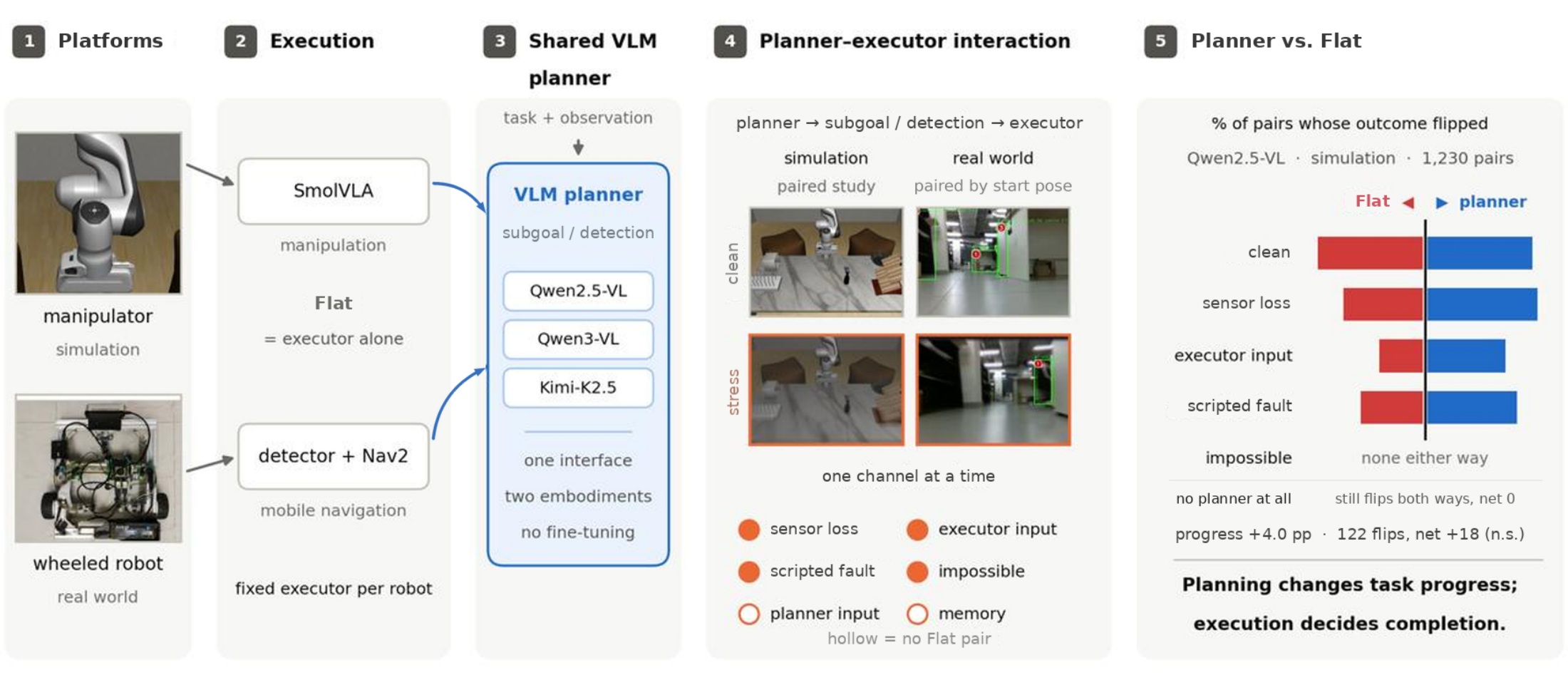
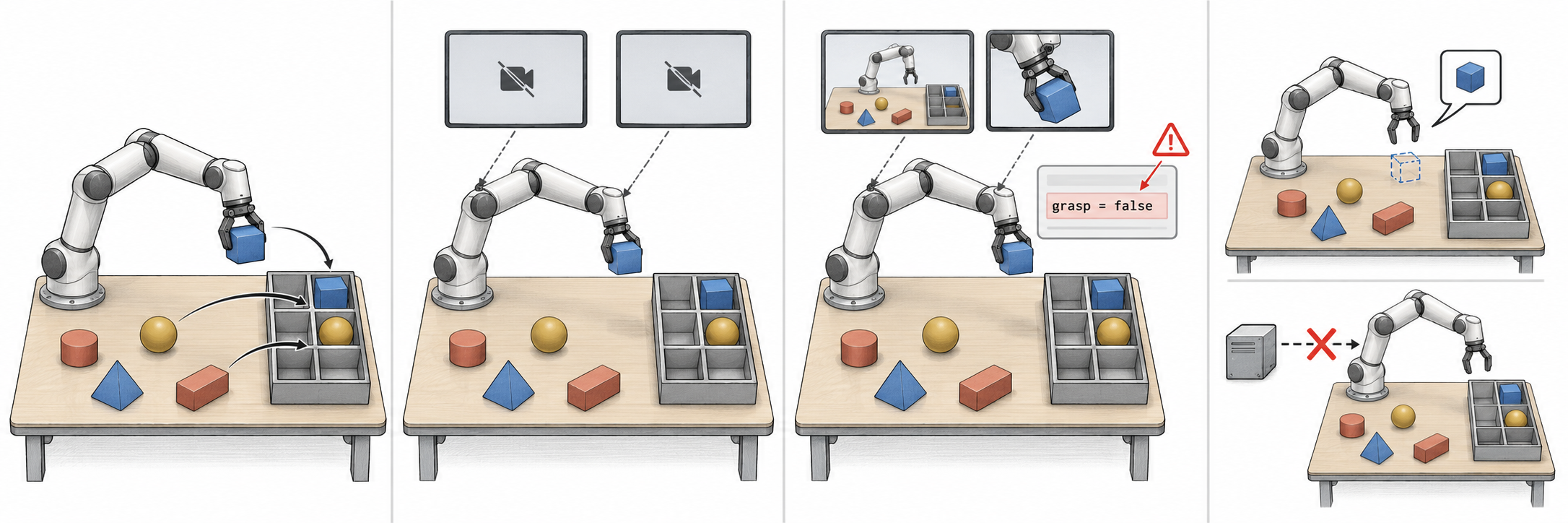
Planner pipeline: manipulation
Manipulation study: planner-selected subgoals for a fixed SmolVLA executor.
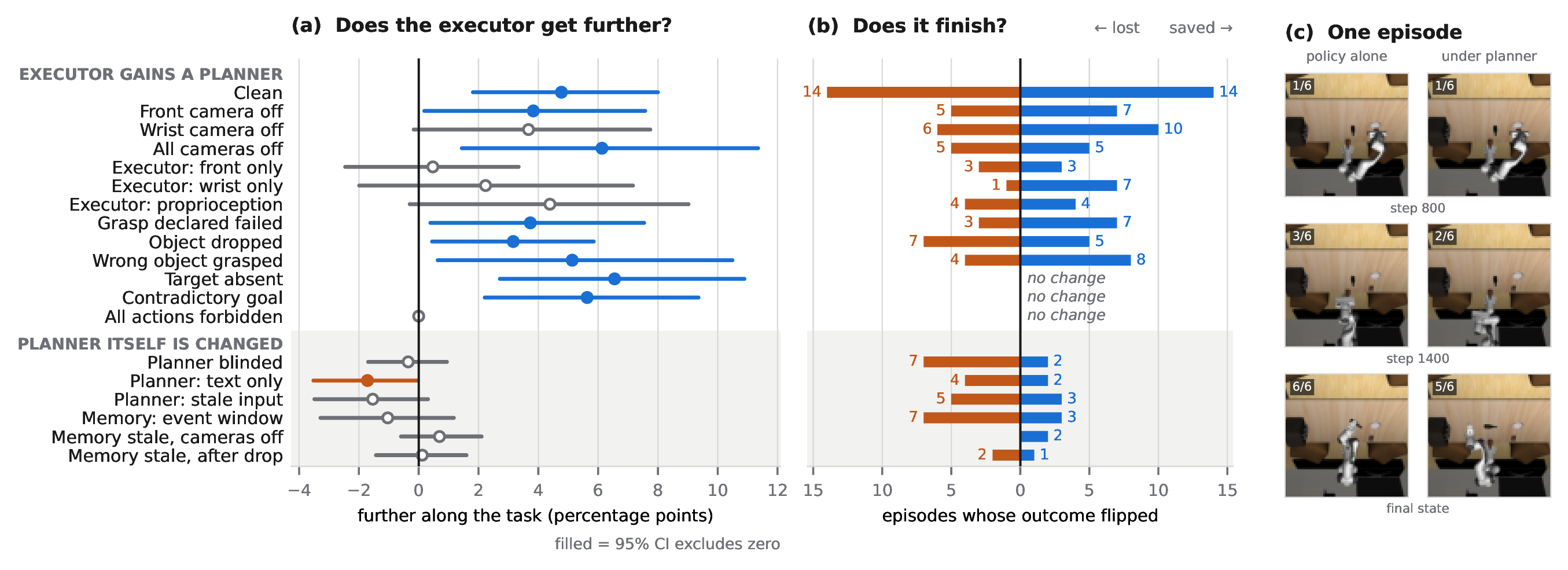
Our contribution: measuring help, harm, and chance
Count what a net success rate hides. Replay each task from the same start, with and without guidance; count rescued failures and disrupted successes separately.
Measure how much change happens without a planner. Replay the fixed policy against itself to estimate its own outcome variability.
Test the cost and limits of intervention. Compare planner models, reference goals and larger execution budgets to examine why progress may improve while completion does not.
What can the planner change?
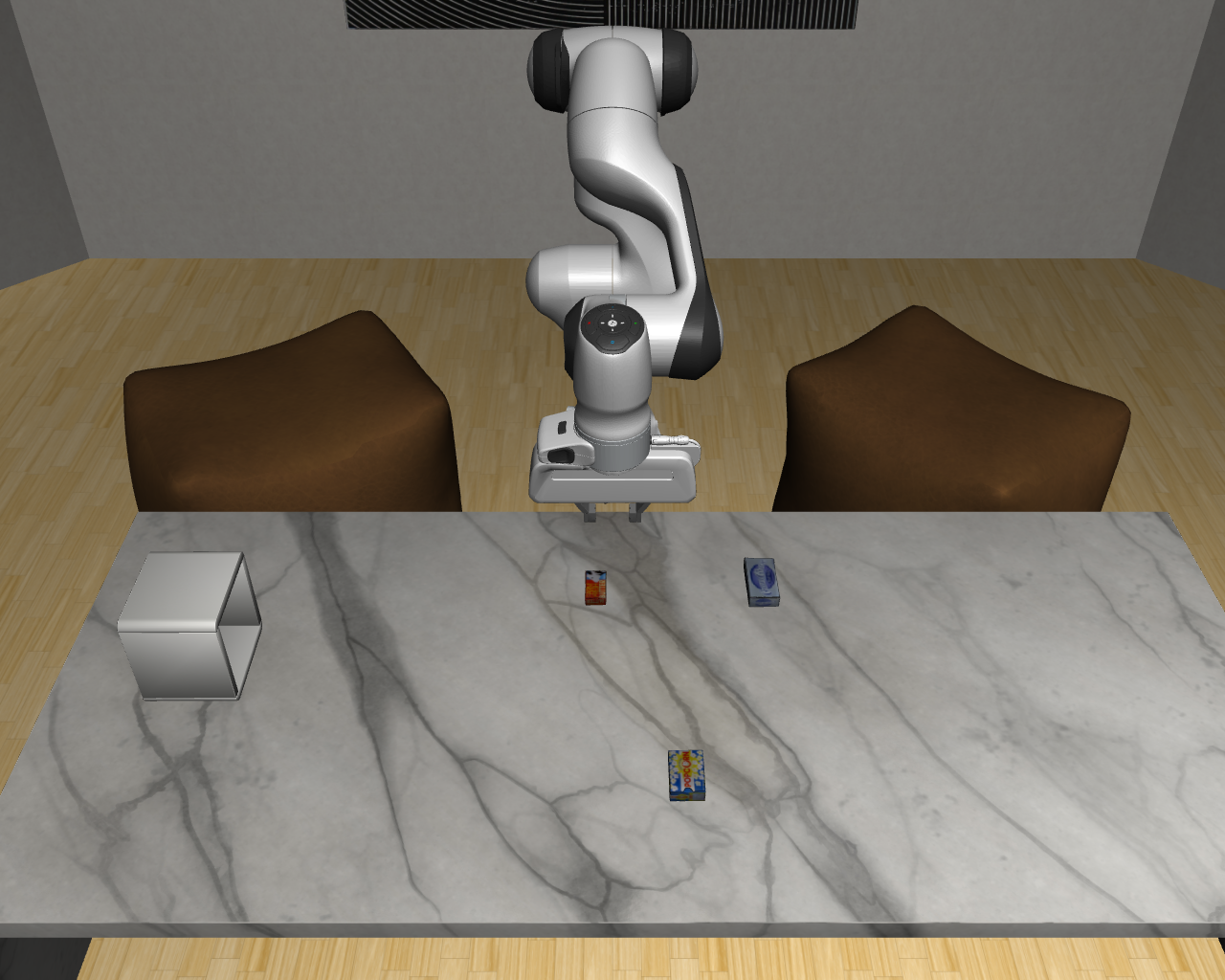
“Put the three food boxes into the organizer.”
PlannerInstruction + observation↓ current goal
“Pick up the butter.”
↓Fixed SmolVLAImages + state + goal → actions
Pick / place cream cheese → Pick / place popcorn → Pick / place butter
The planner selects the request; the executor performs the action.
Upper block: 1,230 matched pairs, 13 conditions. Shaded rows use their own baselines.
Previously successful episodes can fail under guidance
Among the 176 episodes solved by the fixed policy:
Goal source
Successes lost
Conditional loss rate
Qwen2.5-VL
52 / 176
29.5%
Qwen3
56 / 176
31.8%
Reference goals
76 / 176
43.2%
Kimi-K2.5
77 / 176
43.8%
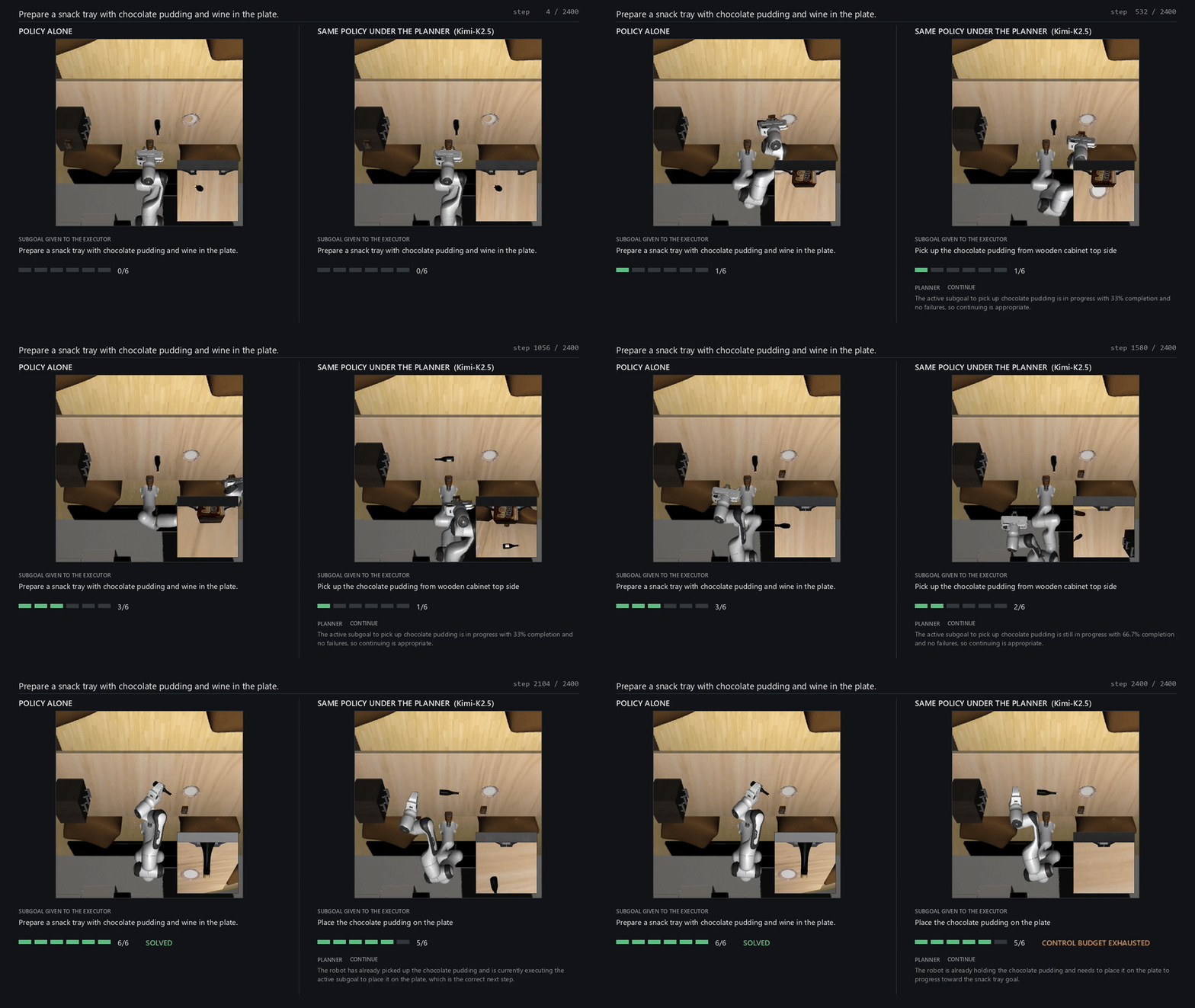
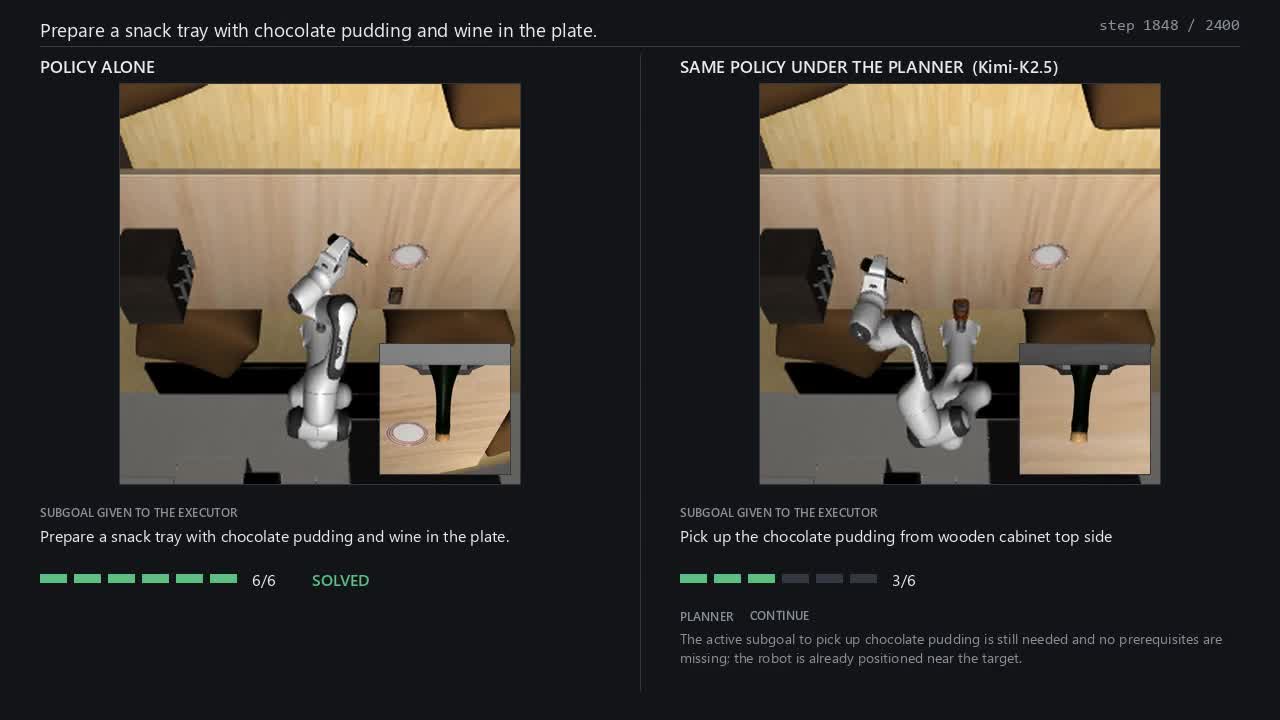
Manipulation: a paired execution demonstration
Left: Flat model (policy alone)Right: Planner-guided policy
Flat on the left · Planner on the right · original playback speed
Kimi-K2.5 planner · shared execution clock · fixed policy in both branches.
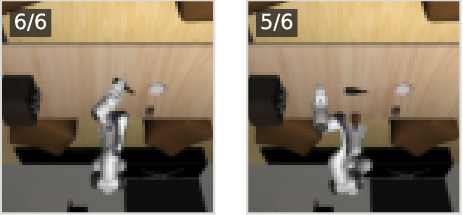
Almost finished is still unfinished
Policy aloneWith planner
Final state under the same control budget
One matched episode
6 / 6Policy alone
5 / 6With planner
The guided policy gets close, but the task is incomplete.
Kimi-K2.5 · Ideal/case5/seed0 Different from the Qwen headline experiment.
Count completed tasks as well as partial progress.
Manipulation study: findings
More progress did not clearly translate into more finished tasks. Guidance helped intermediate steps, but the overall completion benefit remained uncertain.
Guidance could help one attempt and disrupt another. Some tasks that succeeded with the policy alone failed after planner intervention.
Useful guidance still depended on execution. Reference subgoals did not ensure completion; extra time did not improve Qwen3 completion in the tested comparison.
Planner pipeline: wheeled-robot navigation
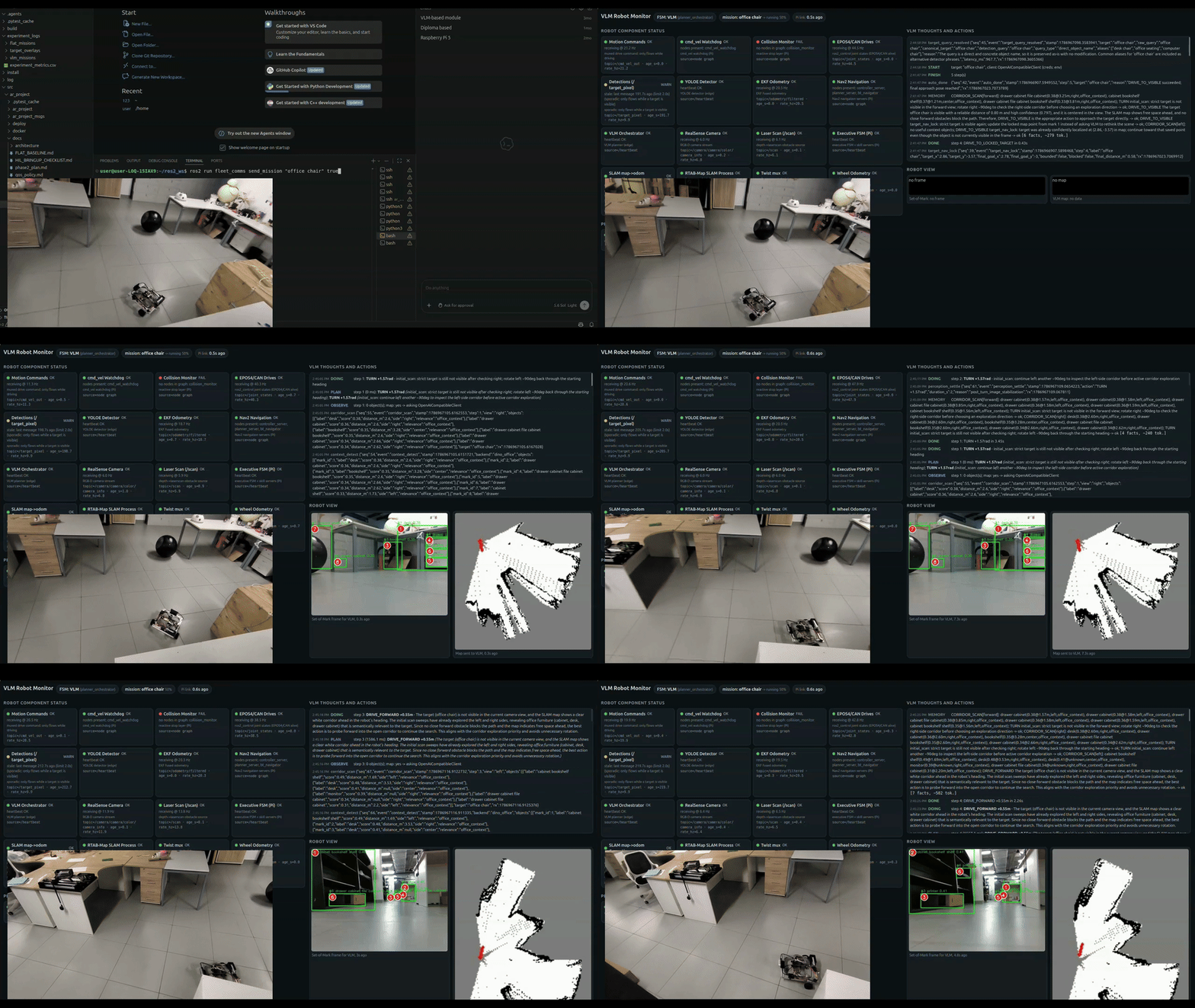
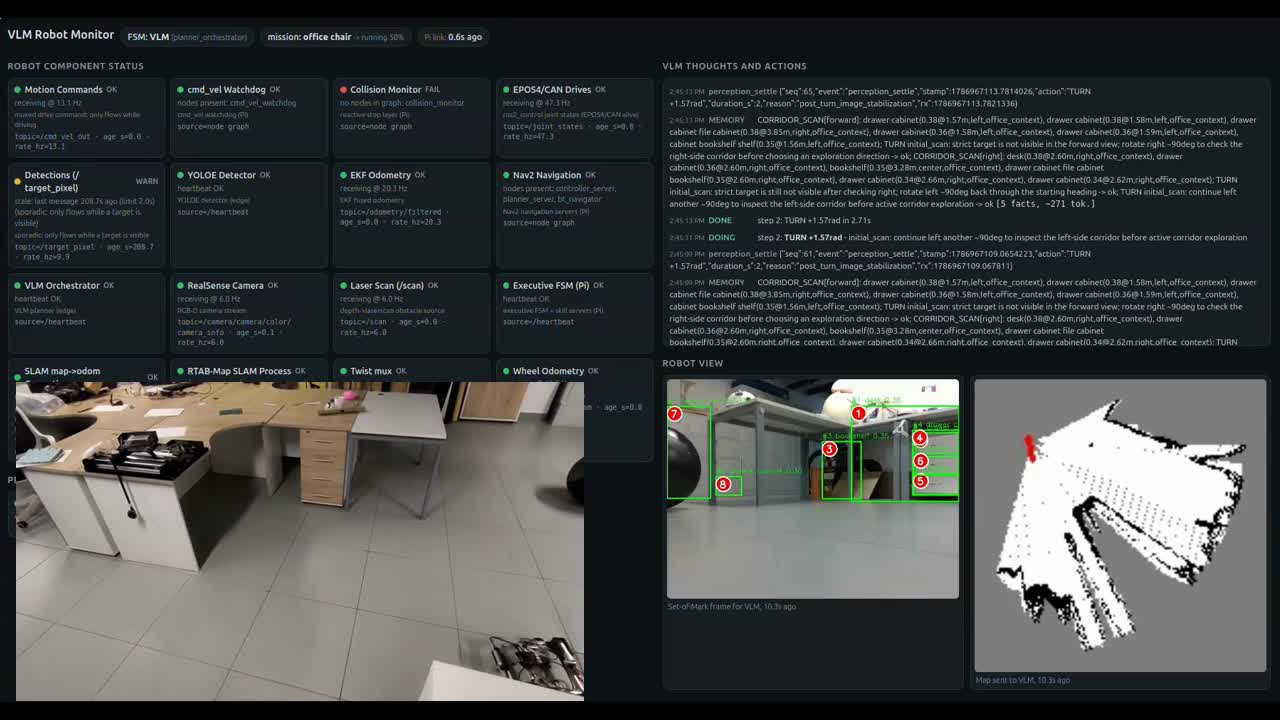
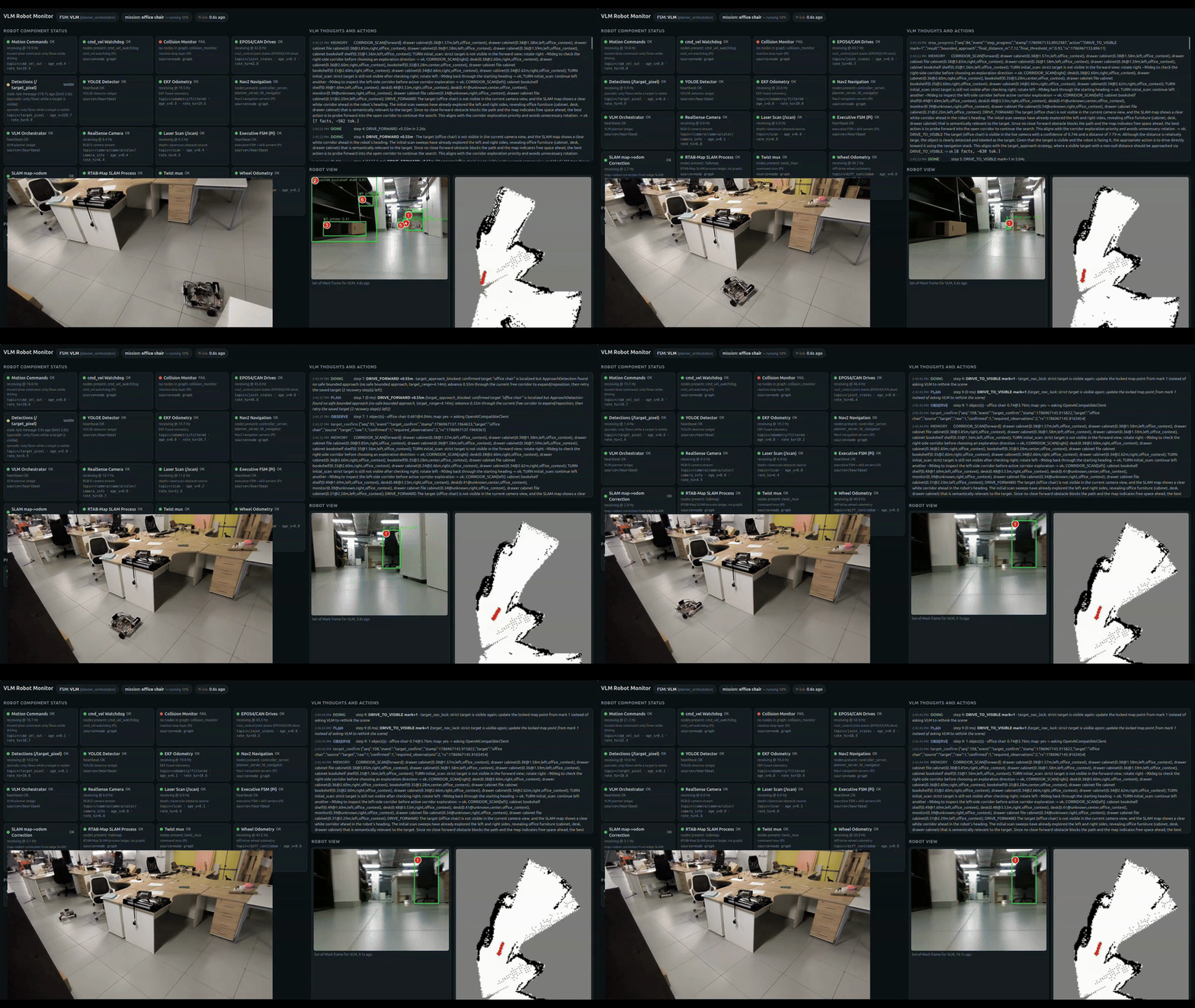
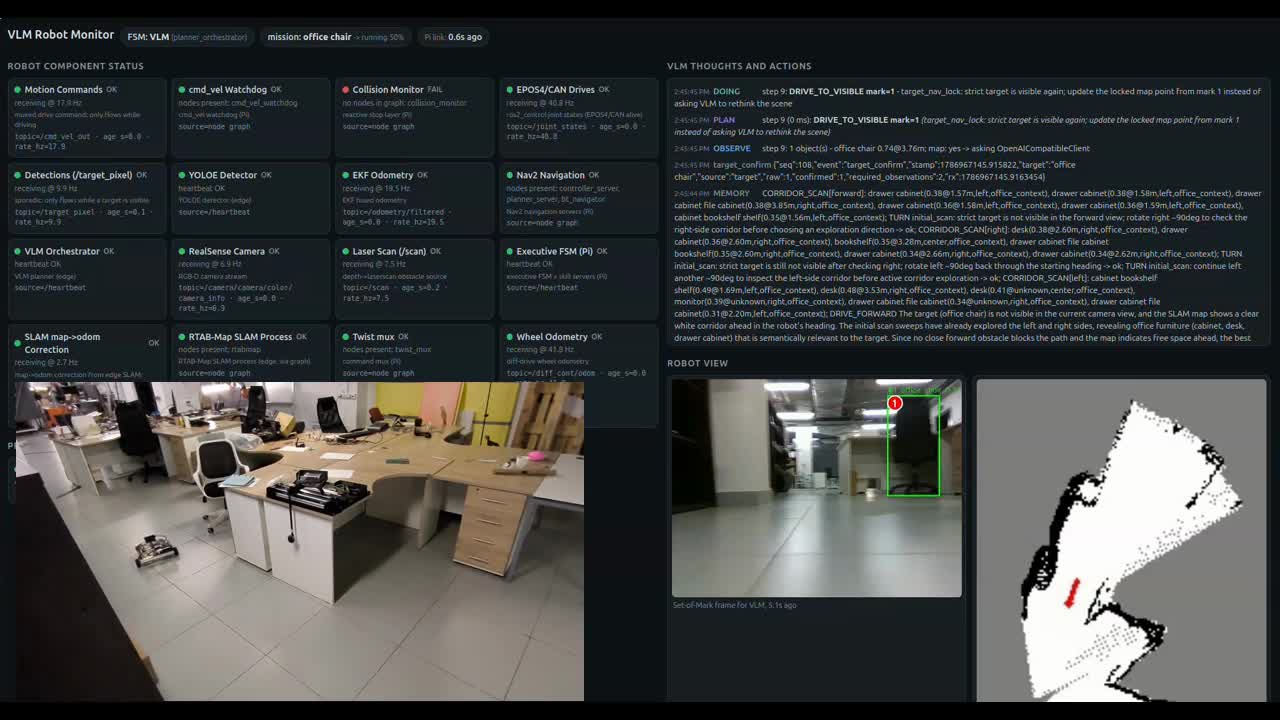
Second study: object search with a fixed detector and Nav2 navigation stack.
Wheeled robot: task and comparison
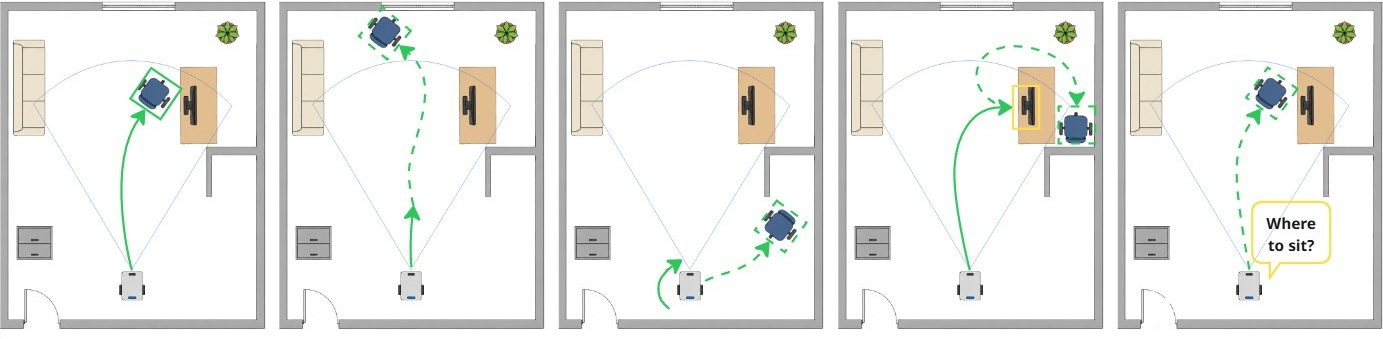
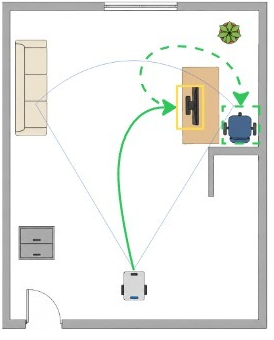
Can planner guidance help the robot reach the requested object when the baseline cannot construct or retain a usable target?
Flat system
Fixed search, detection and approach sequence.
The robot must reach the designated object, not just another object of the same class.
Planner-enabled system
Qwen3-VL selects navigation skills and uses target context and memory.
Same starting pose and heading; five scenes, five trials per scene and system.
Fixed detector and Nav2 executor. This evaluates the broader planner-enabled stack, including memory and interpretation.
Mobile navigation: scene-level completion
System
1
Visible and reachable
2
Fixed scan
3
Outside the map
4
Around the corner
5
Implicit description
Total
Flat
5/5
5/5
1/5
2/5
0/5
13/25
Planner
5/5
5/5
5/5
4/5
5/5
24/25
Five reused scenes × five trials; manual, unblinded scoring. Comparison includes memory and semantic interpretation.
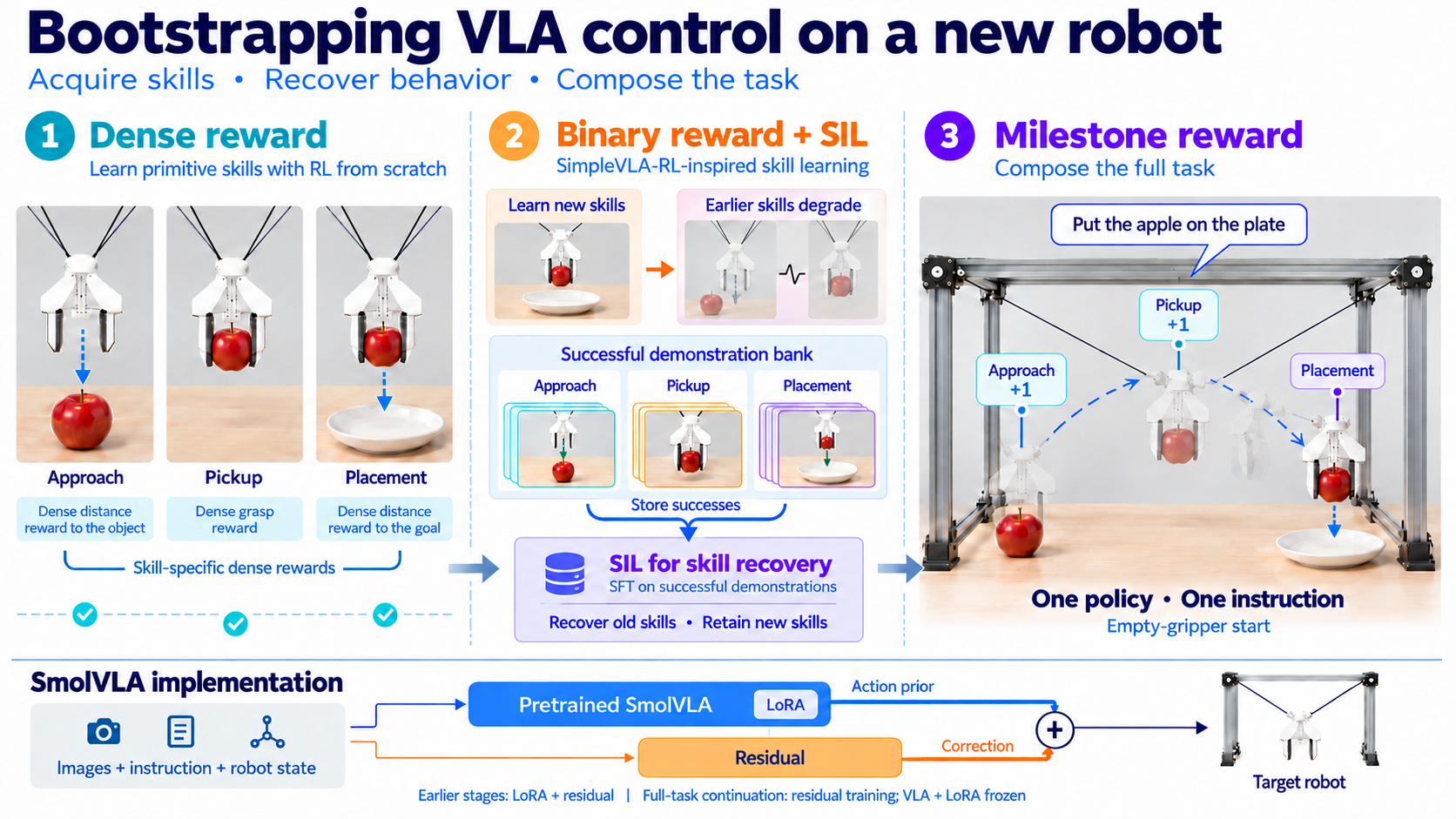
CDPR: learn skills, retain them, then combine them
Learn with RLTry a simple skill
→
Check retentionTest earlier skills
→
SIL if neededRehearse successes
→
Continue RLLearn the next skill
Learn the parts
Approach, pickup and placement have separate instructions and starting states. Dense rewards guide initial progress; binary success rewards refine each skill.
Then learn the whole task
SIL means self-imitation learning. It retains earlier skills using successful actions. Before full-task RL, fit scripted-oracle and assisted complete-task trajectories. Then train from empty-gripper starts.
CDPR stage transitions were validation-guided and manual. Full-task RL and evaluation use unassisted starts.
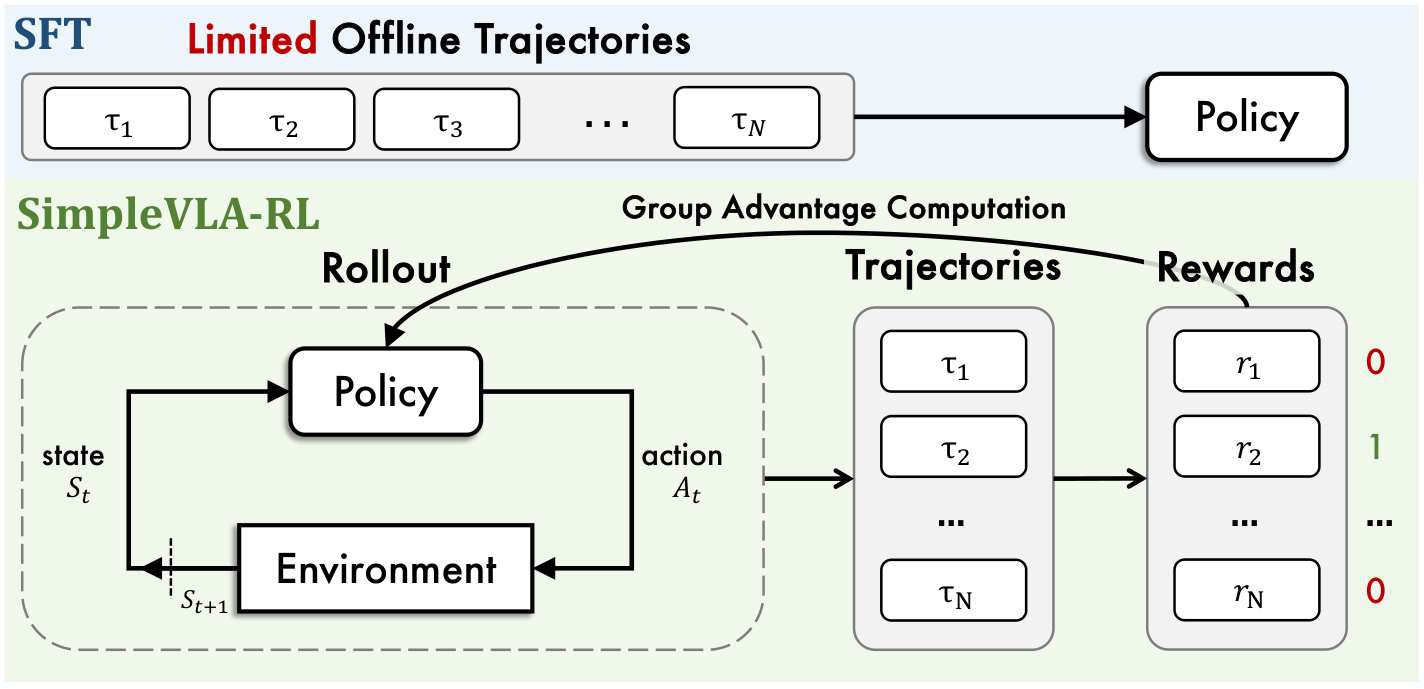
RL: improve actions using rewards
Try the task → score the attempts → update the policy.
Small policy updates
PPO-style clipping reduces the incentive for large action-likelihood changes; it does not impose a hard bound on the update.
LRL is the training loss. Lclip is the clipped policy loss.
Compare attempts
Group-relative credit (GRPO-style) compares attempts from the same scene.
H encourages exploration. η controls its strength.
Learning a new skill can erase an old one
Reaching success
Before learning to carry and place
64.1%
After learning to carry and place
5.3%
What happened?
Placement practice starts with the object already held.
The policy learns transport and release, but its earlier reaching skill deteriorates.
Learning the latest skill can overwrite useful earlier behavior.
Isolated reaching test · three evaluation rounds per condition.
SIL: recover skills by imitating successful actions
SIL means self-imitation learning: fit the policy to its own successful actions.
Balance successful actions by instruction, fit the policy, check retention, then resume RL.
Separate recovery evaluation · reaching: 3 rounds; placement: 2 rounds per condition.
Skill
Before SIL
After SIL
Reaching
8.0%
31.1%
Plate placement
50.0%
52.3%
Bowl placement
23.05%
27.65%
Partial recovery; separate from the preceding forgetting test.
Full-task RL: keep credit for a successful pickup
After consolidation and oracle/assisted fitting: full-task RL · empty-gripper start
Approach ✓
Milestone achieved
→
Held pickup ✓
Milestone achieved
→
Placement ×
Task incomplete
Keep local credit
Approach and pickup retain their milestone-specific learning signal.
Train the remaining step
Suppress the negative completion bonus on achieved approach/pickup milestones.
Preserve useful partial behavior while learning to finish.
Milestones assign training credit; evaluation uses no external skill switching.
Zero-to-100% scale. One training lineage. Development validation.
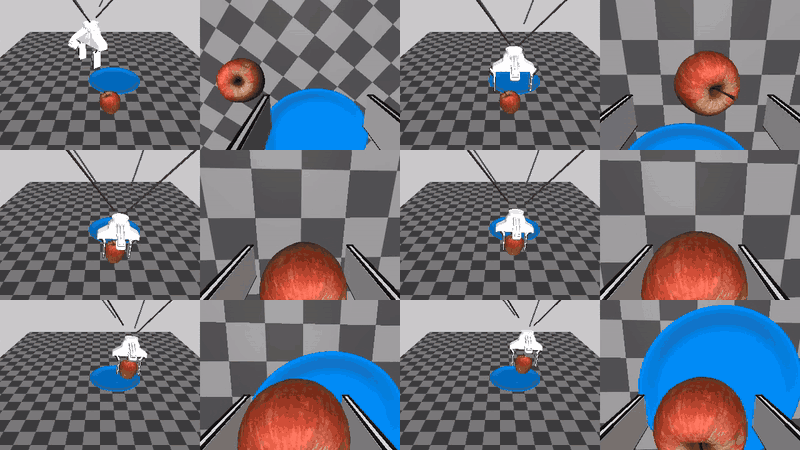
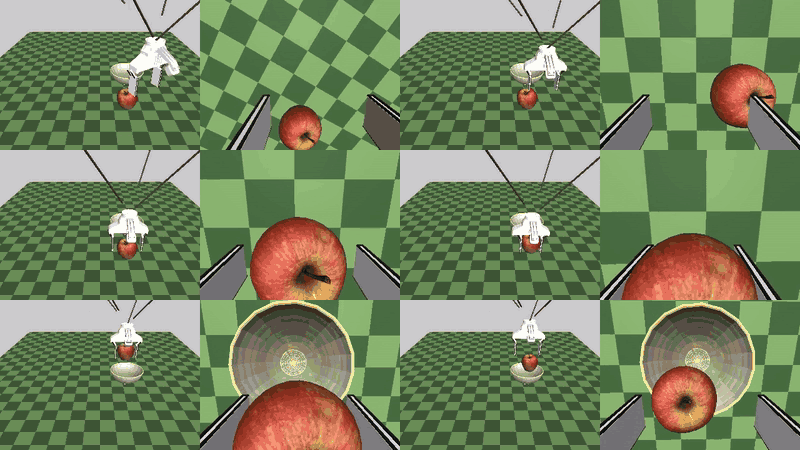
Selected historical successes
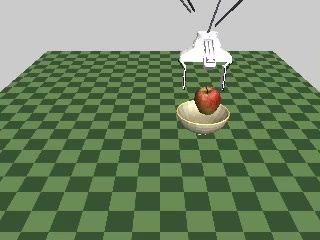
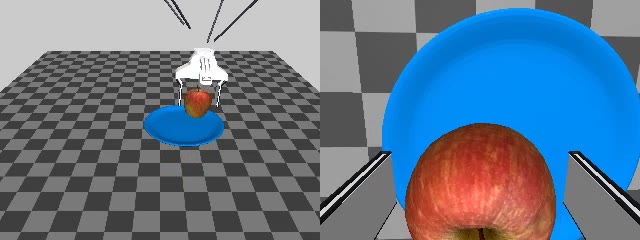
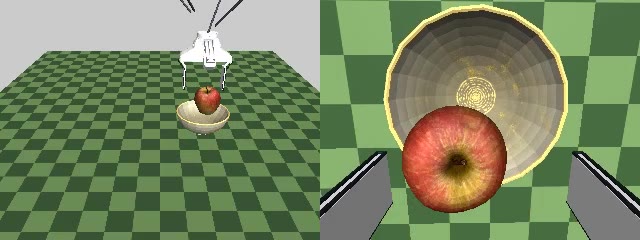
Apple into plateApple into bowl
Historical examples; separate from the 70.61% endpoint.
Transport and release remain the main bottleneck.
Strict success: grasp, held lift, intentional correct release; no carry slip or wrong placement. All attempts include numerical failures.
Full-task completion across destination types
Outcome
All attempts
Strict completion
723/1,024 · 70.61%
Plate completion
393/512 · 76.76%
Bowl completion
330/512 · 64.45%
Carry slip
16.70%
Wrong placement
14.16%
Development validation used during training. Empty-gripper starts, one instruction, no teacher assistance. All attempts retained; event flags can overlap.
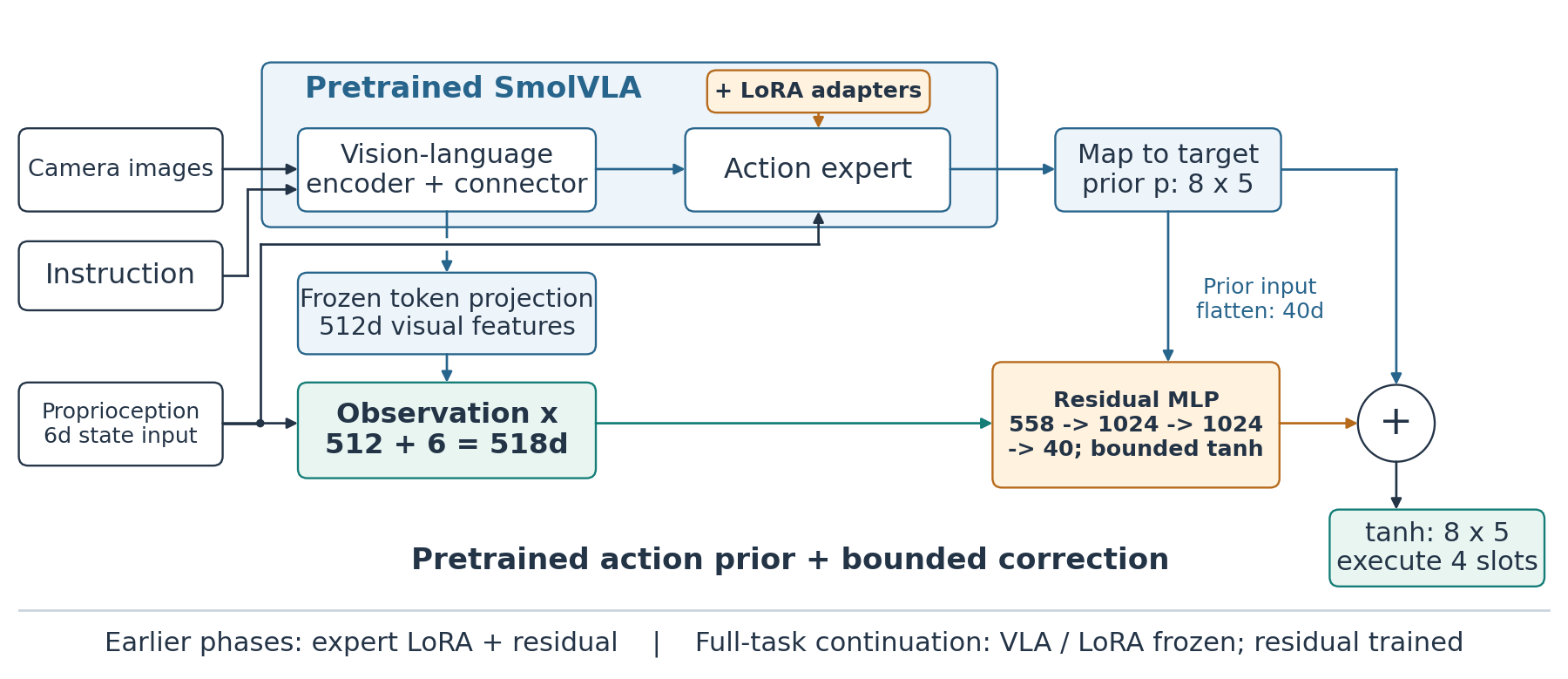
CDPR adaptation: procedure and observed outcome
Three problems
New action interface Too few successful complete rollouts Earlier skills degrade during new training